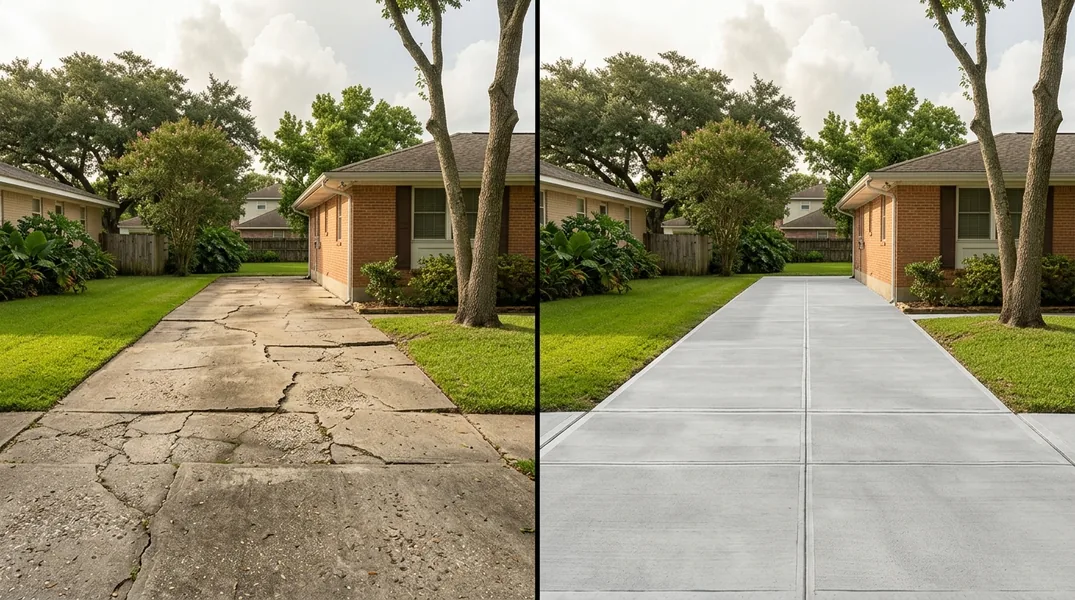
Why Timing Matters: Concrete Pouring Season in New Orleans
If you're planning a Concrete Driveways project in New Orleans, you might think any season works fine. After all, concrete is concrete, right? The reality is far more nuanced, especially in Louisiana's unique climate. The timing of when you pour concrete directly impacts how well it cures, how long it lasts, and ultimately, how much you'll spend maintaining it.
New Orleans sits in a subtropical climate with high humidity year-round, intense summer heat, and wet winters. These conditions create challenges that contractors in drier regions simply don't face. Temperature, moisture, and humidity all play critical roles in concrete curing, and understanding these factors will help you make the smartest decision for your project. Whether you're installing a new driveway, Concrete Patios, or planning Stamped & Decorative Concrete, the season you choose matters more than you might realize.
Spring and Fall: The Ideal Windows for Pouring Concrete in Louisiana
Spring (March through May) and fall (September through November) represent the sweet spot for concrete pouring in Louisiana. During these months, temperatures remain moderate, typically ranging from the mid-60s to low 80s Fahrenheit. This temperature range is ideal because it allows concrete to cure at a steady, predictable pace. The concrete won't cure too quickly, which can lead to cracking and surface problems, nor will it cure too slowly, which extends your project timeline unnecessarily.
Spring offers the additional advantage of lower humidity levels compared to summer months, and the weather patterns are generally more stable. Fall conditions are similarly favorable, though you'll want to complete your project before the winter rains arrive in earnest. Both seasons provide enough daylight hours for contractors to work efficiently and monitor the curing process properly. If you're considering a concrete project and want the best possible outcome, scheduling your work during spring or fall is the professional recommendation from any experienced New Orleans Concrete contractor.
Curing Concrete in Humidity: The Louisiana Challenge
Louisiana's humidity is legendary, and it presents a unique challenge when curing concrete. Humidity affects how water evaporates from the concrete surface, which is essential for proper curing. When humidity levels are too high, water evaporates more slowly, which can actually be beneficial up to a point. However, excessive humidity combined with heat creates conditions that can cause surface crazing, scaling, and uneven curing patterns. This is why summer months in Louisiana are particularly problematic for concrete work.
During summer, temperatures regularly exceed 90 degrees Fahrenheit, and humidity often hovers above 70 percent. These combined conditions can cause the concrete surface to cure faster than the interior, leading to internal stress and cracking. Additionally, rapid evaporation in extreme heat can cause the concrete to lose moisture too quickly, compromising its strength and durability. Winter months, while cooler, bring heavy rainfall and consistently high humidity that slows curing to a crawl. This extended curing period can delay your project and create conditions where the concrete remains vulnerable to damage for an extended period. Understanding how humidity interacts with temperature is crucial for anyone planning concrete work in Louisiana.
Summer Concrete Work: Proceed with Caution
Summer in Louisiana (June through August) is generally not recommended for concrete pouring, but sometimes circumstances require it. If you must pour concrete during the hot season, special precautions become essential. Early morning pours are preferable, allowing the concrete to set before the afternoon heat peaks. Your contractor should use cooling techniques such as shading the concrete with tarps, using cooler water in the mix, and potentially adding retarders to slow the curing process and prevent rapid surface hardening.
Summer pours also require more frequent and careful monitoring during the curing period. The concrete will need to be kept moist longer than typical, and protection from direct sunlight is critical. If you're considering summer concrete work, discuss these challenges openly with your contractor and get a clear pricing breakdown that accounts for the extra labor and materials required. The cost of doing it right in summer is often higher than waiting for a better season, which is worth factoring into your decision.
Winter Weather and Concrete Curing: Why Late Fall is Better
Winter months in Louisiana are characterized by cooler temperatures and significant rainfall. While the cooler temperatures might seem favorable for concrete curing, the consistent moisture and cold temperatures create problems. Concrete needs to cure properly before it's exposed to freeze-thaw cycles, and Louisiana winters can occasionally dip below freezing, especially in January and February. If concrete hasn't fully cured when temperatures drop below 40 degrees Fahrenheit, the water within it can freeze, causing expansion and damage.
Additionally, the frequent rain during winter months makes it difficult to control the curing environment. Concrete needs protection from excessive water during the curing process, and constant rainfall complicates this requirement. Late fall (October and early November) offers a better alternative, providing cooler temperatures without the extreme cold or constant precipitation. If your project must happen in winter, your contractor will need to implement additional protective measures and allow for an extended curing period, both of which increase project costs and timelines. Whenever possible, scheduling your concrete work for late fall rather than winter is the smarter choice.
Planning Your Concrete Project: Next Steps Near You
Now that you understand the best timing for concrete work in Louisiana, the next step is connecting with a professional contractor who understands local conditions. New Orleans Concrete has been serving the community with expertise in everything from standard Concrete Driveways to specialized Concrete Repair & Resurfacing. Our team knows exactly how Louisiana's climate affects concrete curing and can recommend the optimal timing for your specific project.
Whether you're planning a spring project or need advice about concrete work you're considering for later in the year, the team at New Orleans Concrete is ready to help. Call us at (504) 565-2441 or visit our website at https://new-orleans-concrete.com to request a free estimate. We'll discuss your project timeline, explain how seasonal factors affect your specific needs, and provide honest guidance about the best time to move forward. Don't let uncertainty about timing delay your project. Let the professionals help you make the right decision for your concrete needs.
Looking for a professional concrete contractor in New Orleans? New Orleans Concrete responds fast for all your concrete needs.
Get a Free QuoteOur services: Concrete Driveways · Concrete Patios · Stamped & Decorative Concrete