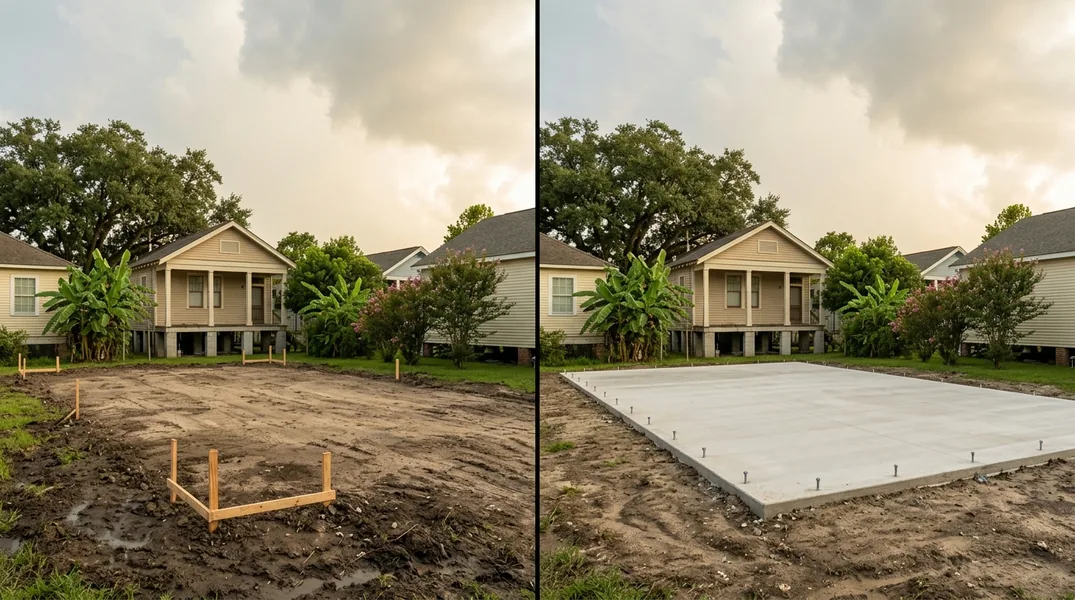
Understanding New Construction Slabs in New Orleans
Buying a new home in New Orleans is exciting, but it comes with unique challenges that many first-time homebuyers don't anticipate. One of the most critical aspects of any new construction purchase is understanding the foundation system, particularly the concrete slab your home sits on. Unlike homes built in drier climates, New Orleans new construction homes typically use specialized foundation systems designed to handle our region's high water table, clay soil, and frequent moisture exposure.
A new construction slab in New Orleans is rarely a simple, flat concrete pad poured directly on the ground. Instead, builders employ sophisticated engineering solutions to prevent settling, cracking, and water damage. Understanding these systems before you close on your property is essential for protecting your investment and avoiding costly repairs down the road. This guide walks you through what you need to know about the concrete foundation supporting your new home.
What Are Pile-Supported Slabs and Why Louisiana Builders Use Them
If you're shopping for new construction in Louisiana, you'll frequently hear the term pile-supported slab. This foundation method is the gold standard for homes built in our region, and for good reason. A pile-supported slab Louisiana construction involves driving deep pilings (steel or concrete posts) into the ground until they reach stable soil or bedrock, then pouring a concrete slab on top of those pilings. This approach lifts your home above the water table and distributes weight evenly across stable ground layers, preventing the uneven settling that plagues many older homes.
The reason builders favor pile-supported slabs in Louisiana is straightforward: our soil composition and climate demand it. New Orleans sits in a region with notoriously poor soil conditions. The top layers consist of soft clay, silt, and organic material that compress and shift over time, especially when exposed to moisture. Without pilings, a concrete slab would settle unevenly, creating cracks and structural stress. Pile-supported systems keep your home stable and protected, which is why most reputable builders in the area use them for new construction projects. When you're evaluating a new home, ask your builder specifically about the pilings: how deep they go, what material they're made from, and whether they've been professionally tested and certified.
New Home Foundation Inspection: What to Look For Before Closing
A new home foundation inspection is not optional if you're buying new construction in Louisiana. Even though the home is brand new, you need an independent professional to examine the concrete slab, pilings, and surrounding grading before you sign the final paperwork. Many homebuyers mistakenly assume that because a home is new, the foundation must be perfect. In reality, construction defects happen, and catching them before closing is infinitely easier than fighting with a builder afterward.
During your new home foundation inspection, a qualified engineer or inspector should examine several key areas. First, they'll look at the concrete slab itself for cracks, settlement patterns, and signs of moisture intrusion. They'll check that the slab is properly sloped away from the house to encourage water drainage. They'll also inspect the perimeter beams, verify that pilings are properly spaced and load-rated, and confirm that all concrete work meets local building codes. In Louisiana, it's especially important to verify that the foundation design accounts for flood risk and that any required elevation measures have been properly implemented. Ask your inspector to provide a detailed written report, and don't hesitate to request that the builder address any issues before closing.
Common Concrete Issues in New Orleans New Build Homes
Even with modern construction standards, new homes in New Orleans sometimes develop concrete problems. Understanding the most common issues helps you spot red flags during your inspection. One frequent problem is differential settling, where one section of the slab settles more than another, creating visible cracks or causing doors and windows to stick. While minor cracking is normal as concrete cures, large or expanding cracks warrant concern. Another issue is water infiltration through the slab or around the perimeter, which can lead to mold, musty odors, and structural damage if left unchecked.
Concrete spalling (surface deterioration) and efflorescence (white, powdery deposits on concrete) also occur in new homes, particularly in New Orleans where humidity and salt air accelerate concrete degradation. If you notice these issues after purchase, professional Concrete Repair & Resurfacing may be necessary to prevent further damage. Additionally, improper drainage around the foundation can cause standing water, which stresses the slab and creates long-term problems. Your foundation inspection should specifically address drainage design and grading. If issues are identified, document everything and negotiate with the builder for repairs before closing.
Questions to Ask Your Builder About Your New Construction Slab
Before closing on your new construction home, sit down with your builder or their representative and ask detailed questions about the foundation system. You have every right to understand how your home is built. Start by asking for complete documentation of the foundation design, including engineering plans, soil boring reports, and pile specifications. Request information about the concrete mix used for the slab, the curing time, and any special treatments applied for moisture resistance. Ask whether the builder used any waterproofing membranes or vapor barriers beneath the slab, and request proof that these materials meet current standards.
Also inquire about the builder's warranty on the foundation and concrete work. Most reputable builders offer structural warranties that cover foundation defects for a specified period (often 10 years in Louisiana). Understand what's covered, what's excluded, and how to file a claim if problems arise. Ask for the name and contact information of the engineer who designed the foundation and the contractor who poured the slab. Request a copy of all concrete testing reports, including strength tests and soil compaction verification. These documents provide proof that the work meets code and gives you leverage if disputes arise later. Don't accept vague answers or promises; insist on written documentation for everything.
Protecting Your Investment After Closing
Once you've closed on your new home and moved in, your responsibility for the concrete foundation doesn't end. Proper maintenance and monitoring help prevent small issues from becoming expensive problems. Keep the area around your home's perimeter clear of debris and standing water. Ensure gutters and downspouts direct water at least six feet away from the foundation. Monitor the concrete slab for new cracks or settlement patterns, and photograph any changes you notice. Many homeowners establish a baseline by taking photos of the foundation during the first month after purchase, making it easier to identify new damage later.
If you notice cracks, water stains, or other concrete concerns, don't wait to address them. Early intervention often prevents costly repairs. If you need professional assessment or repairs, New Orleans Concrete is here to help. Whether you need evaluation of existing concrete or repairs to protect your foundation, you can reach us at (504) 565-2441 or request a free estimate online. We serve New Orleans and surrounding areas, and we understand the unique foundation challenges homes face in Louisiana. Protecting your concrete foundation now means protecting your home's value and structural integrity for years to come.
Looking for a professional concrete contractor in New Orleans? New Orleans Concrete responds fast for all your concrete needs.
Get a Free QuoteOur services: Concrete Driveways · Concrete Patios · Stamped & Decorative Concrete